
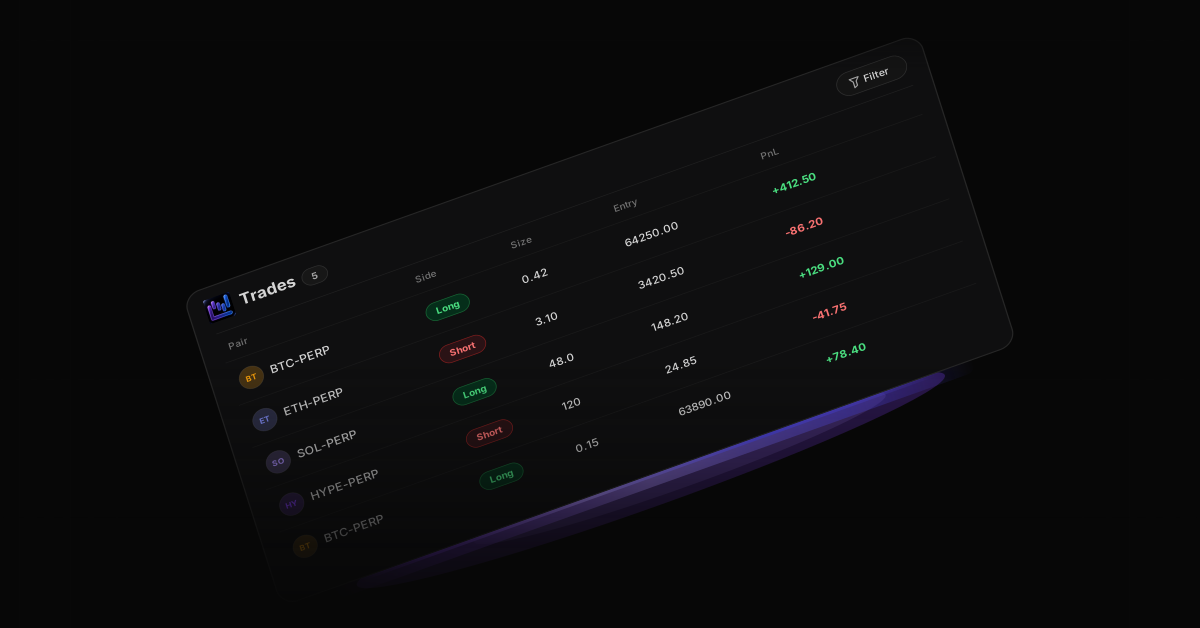
A crypto trading journal records what you traded, why, the fees and funding that moved the result, and what you will change next. Run it in a spreadsheet this week. Move to software when the ritual sticks.
Quick answer
Start manual. You do not need API sync on day one.
- Pick one log and one timezone for every timestamp.
- Log time, exchange, pair, side, size, entry, exit, fees, and a one line thesis.
- For perps, add leverage, margin mode, funding paid or received, and liquidation proximity.
- Tag setup, mistake (or none), session, and market condition.
- After the session, write a short daily note. Do not paste every fill again.
- Once a week, review sessions, funding, concentration, and tags. Change one rule.
- Keep raw fills so you can reconcile when numbers disagree.
What makes crypto different
A stock template misses costs.
- Crypto trades all week. Session is a label you assign. Fix the windows for a quarter, for example London as 03:00 to 12:00 America/New_York. Give weekends their own bucket.
- Perps pay or charge funding on a schedule. Spot still has maker and taker fees. If you only store entry and exit, expectancy looks too good.
- The same pair on two exchanges is not one trade. Tag venue and account. Keep deposits, withdrawals, and transfers out of trade results.
- Leverage turns a small error into an account event. Write a cap in the header. A winner that broke the cap still gets a mistake tag.
Fields that earn their place
A short row you finish beats a perfect row you skip. Write the size unit in the header (base coin or quote notional) and do not switch mid month.
| Field | Spot | Perps |
|---|---|---|
| Time and timezone | Yes | Yes |
| Exchange and account | Yes | Yes |
| Pair, side, size | Yes | Yes |
| Entry, exit, fees | Yes | Yes |
| Fee adjusted result | Yes | Yes |
| Thesis, setup, mistake | Yes | Yes |
| Leverage and margin mode | No | Yes |
| Funding for the hold | No | Yes |
| Liquidation distance | No | Yes |
| Hold time | Nice | Yes |
If a trade is still open, mark it open, update funding while it is on, and close the row when you are flat. Say whether the number is marked or realized.
Partials are common. Either log each reduce as a child row under one trade id, or update the parent exit and size when flat. Pick one method in week one. Scale ins use the same rule. Average entry lives on the parent.
Tags you can filter later
Use a short closed list. One primary setup per trade. Mistake is required. Use none when you earned it. Do not invent a tag mid week. Park new ideas and promote them on review day.
- Setup: breakout, mean reversion, funding arb, news fade, range scalp.
- Mistake: FOMO, revenge, overleverage, moved stop, no plan, size too big, none.
- Session: Asia, London, New York, weekend.
- Market: trend, chop, high funding, event volatility, low liquidity.
Skip tags like good trade. They praise you and teach nothing. Breakout plus none, or breakout plus chased late, is a pair you can count.
Daily note and weekly review
Trade notes sit on the fill: thesis, invalidation, exit reason, mistake, and a chart link.
The daily note is the day, not a second blotter.
- Bias at the start
- Rules in force
- Rule breaks
- One line on state
- What changes tomorrow
Block 30 to 45 minutes once a week. Filter the rows first.
- Which session made or lost money after fees?
- What was net funding, and which holds drove it?
- Did two pairs hide the result while the rest leaked?
- Which mistake showed up most? Change that one rule.
- What were median and max leverage versus your cap?
- Are any perps still open into the weekend?
Write the change, the tag or metric that forced it, and a revisit date two weeks out. If you change five things, you will not know what worked.
Sheets or software
Sheets are enough for one venue, a manageable fill count, and a file you already open. Software helps when partials, funding, and several exchanges eat the hour you meant to spend reviewing.
Test with your last month of fills, not a demo book. List the fields you need, trial one tool, and keep the sheet as backup for 30 days.
Multi asset journals such as TradesViz, TraderSync, TradeZella, and Stonk Journal can record crypto trades. Crypto native products such as TradeStream, CoinMarketMan, and Hyerlo focus on exchange workflows and perps. Match the tool to funding visibility, account tags, and whether you will review. Check each vendor site for features and pricing before you pay.
This week
- Create the spot columns, plus perps columns if you use leverage.
- Write the tag lists.
- Backfill the last 10 to 20 trades from exchange history.
- Put a 30 minute review on the calendar.
- Pick one rule to measure: max leverage, max trades per day, or no weekend holds.
- Save dated CSV exports for reconciliation.
Hyerlo is a live crypto trading journal. You can bring history in with read only API sync for Phemex, Bybit, and Binance Futures, CSV import, or manual entry. Review uses tags and notes, a trades dock with charts, a calendar, and dashboard widgets for results, drawdown, hit rate, fees split between trading and funding, streaks, and overtrading. Try it at hyerlo.com. Docs are at hyerlo.com/docs. Hyerlo does not include AI insights. The sheet process above still works if you are not ready to switch.
Frequently asked questions
What should a crypto journal entry include?
Time, venue, pair, side, size, prices, fees, result, a one line thesis, and setup plus mistake tags. Add a short daily note for rules and state. Keep it short enough to finish after the session.
How do I journal perpetual trades?
Use the spot fields, then add leverage, margin mode, funding for the hold, liquidation proximity, and hold time. Mark whether the result is realized or only marked.
Is a spreadsheet enough?
Yes, when volume is manageable and you keep tags plus a weekly review. Software earns its place when imports, funding, and several accounts consume the review. Start where you will stay consistent.
This guide is not financial advice. Hyerlo mentions describe the live product. They are not a ranking.