
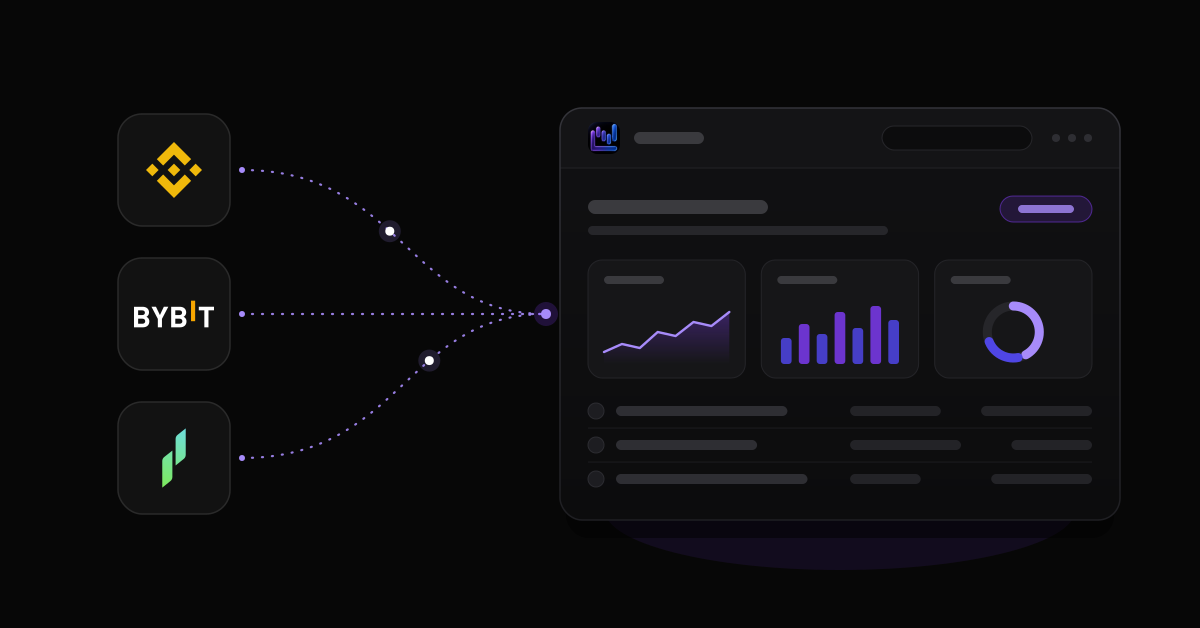
Hyerlo publishes this guide (hyerlo.com). The steps work in a spreadsheet or any journal that can hold more than one account. The venue list later is what Hyerlo syncs or imports, not every exchange. Fact check: 2026-10-02.
Quick answer
Multi exchange journaling fails when every CSV row is a trade and every wallet move is a result. Use five rules.
| Rule | Do this | It prevents |
|---|---|---|
| Account id | One id per venue and subaccount | Results you cannot audit |
| Tags | Exchange, market type, and strategy | A BTC long with no venue |
| Transfers | A separate ledger | Deposits counted as wins |
| Dedupe | The venue trade id | Double fills on re import |
| Reconcile | Each venue, then the roll up | A combined number that never balanced |
This page is consolidation and reconciliation. Daily notes and the broader weekly ritual belong in a general journaling guide.
Why a single broker template fails
Binance plus Bybit plus another CEX creates problems an equities journal rarely sees.
- The same symbol on two venues is not one risk position, even if you think of it as BTC.
- Clocks disagree. A sloppy round can make one fill look like two.
- Fees in a discount token, or fees converted into the quote, break price times size.
- A transfer looks like a loss on one venue and a gain on the other if you journal balances.
- Without account ids, a hedge looks like four directional trades.
Software can import. It cannot invent an account model you never designed. Design the model for the venues you use. Then map tools to that list.
One journal, many accounts
Prefer one workbook or database with an account id on every row. Filters give you each venue and the combined book. Three sheets you add in your head on Sunday drift.
A separate sheet per exchange is fine at low volume if a roll up tab uses reconciled weekly totals, not raw fills pasted twice.
Keep these fields: account id, exchange, subaccount, market type (spot, perp, or dated), quote currency, strategy, venue trade id, and source (API, CSV, or manual). Strategy answers why you took it. Venue answers where it cleared. Do not stuff the venue name into the strategy tag.
When two sources conflict, the source field tells you which row to trust, after you check fees and funding. Do not prefer API only because it sounds smarter.
Logging rules
A few cases need a finer rule than the table.
Log each transfer with time in UTC, asset, amount, from and to, and a tx id when you have one. Subaccount shuffles are ledger rows. If an export shows them as zero price trades, reclassify them.
A long on one venue and a short on another is two legs, or one package with a shared id. Log fees and funding on each leg. Collapsing the hedge into nothing hides funding drag.
Re imports cause most duplicates. Sync by venue trade id, or import CSV windows that do not overlap. Keep a batch id so a bad import can be deleted. Store the fill id, not only the order id.
Fees, funding, and quote currency
Convert discount asset fees into your reporting currency with that day's rate. Pick one funding method on every venue: on the trade, or a ledger you allocate weekly. Store the native quote, and do not mix it with approximate USD on one curve. Dust conversions are maintenance unless they were intentional trades.
A deposit, a transfer, and a withdrawal can dwarf a small trading gain. The honest result is the trades only. If deposit weeks look like skill, the journal is broken.
Keep a blotter for fills, fees, funding, and tags, and an end of week inventory per account: open size, entry, liquidation distance, and margin mode. Inventory catches missing reduces.
Manual, API, or both
CSV needs no standing key and is easy to skip. API sync catches more fills and can break when a venue changes. Use read only keys, no withdraw permission, and IP limits when the exchange offers them. A common mix is API on busy venues, CSV on the rest, and manual entry for OTC. Sync does not replace the weekly reconcile.
Weekly reconcile
Do this before you trust a combined view.
- Trade count per account versus the exchange history.
- Realized result per account versus the exchange, fees included. Explain gaps you care about, including funding timing.
- Funding totals on each perp account.
- Transfer ledger versus deposits and withdrawals.
- No duplicate venue trade ids inside an account.
- Three random fills match your UTC rule.
- The roll up equals the sum of accounts, with transfers handled once.
- Open size and side match the venues.
- No blank exchange or account id on new rows.
- Unexplained gaps go on a list. Do not absorb them.
If step 7 fails, do not coach strategy yet. Fix the accounting first.
Tools
Sheets or Excel can run this whole process. Software helps when volume, venues, or funding lines exceed what you will maintain.
Crypto native journals such as TradeStream, CoinMarketMan, and Hyerlo help when exchange imports are the priority. Multi asset journals such as TraderSync, TradeZella, and TradesViz help when you also want one home for non crypto trades. No vendor owns multi exchange journaling. Sync lists change. Your account model travels with you.
Hyerlo is live. Try it at hyerlo.com. Docs: hyerlo.com/docs.
- Read only API: Phemex, Bybit, and Binance Futures (USDT or USDC linear perps).
- CSV: Hyperliquid fills, Bybit trades, Binance USDM, and a generic template.
- Manual entry when sync or CSV is not enough.
- Multi account is supported. A multi account dashboard starts on the Breakout plan.
Bitget appears in the connect screen. Confirm how far it goes before you treat it as a primary path. Hyerlo does not autosync every CEX. OKX, Kraken, Coinbase, and others may need CSV, manual entry, or another tool. Pricing is a trial, then Base, Breakout, and Expansion. There is no permanent free journal tier. Hyerlo does not include AI insights. These rules work in a sheet whether or not you try Hyerlo.
Frequently asked questions
How do I track Binance and Bybit in one journal?
Give each venue and subaccount an account id. Import fills with the venue trade id. Keep transfers on a ledger. Filter for each exchange, and roll up only after the reconcile. On Hyerlo, Binance Futures and Bybit have read only API sync. Other product types may still need CSV.
Should transfers count as trades?
No. They change balances. They should not enter win rate, expectancy, or strategy stats. Use them only to explain equity moves.
How do I avoid duplicate trades?
Key every fill by the exchange trade id inside an account. Do not import overlapping CSV windows. When two sources disagree, check the fee and funding map before you pick a winner.
Not financial advice. Combined views that have not been reconciled are how traders invent an edge.